
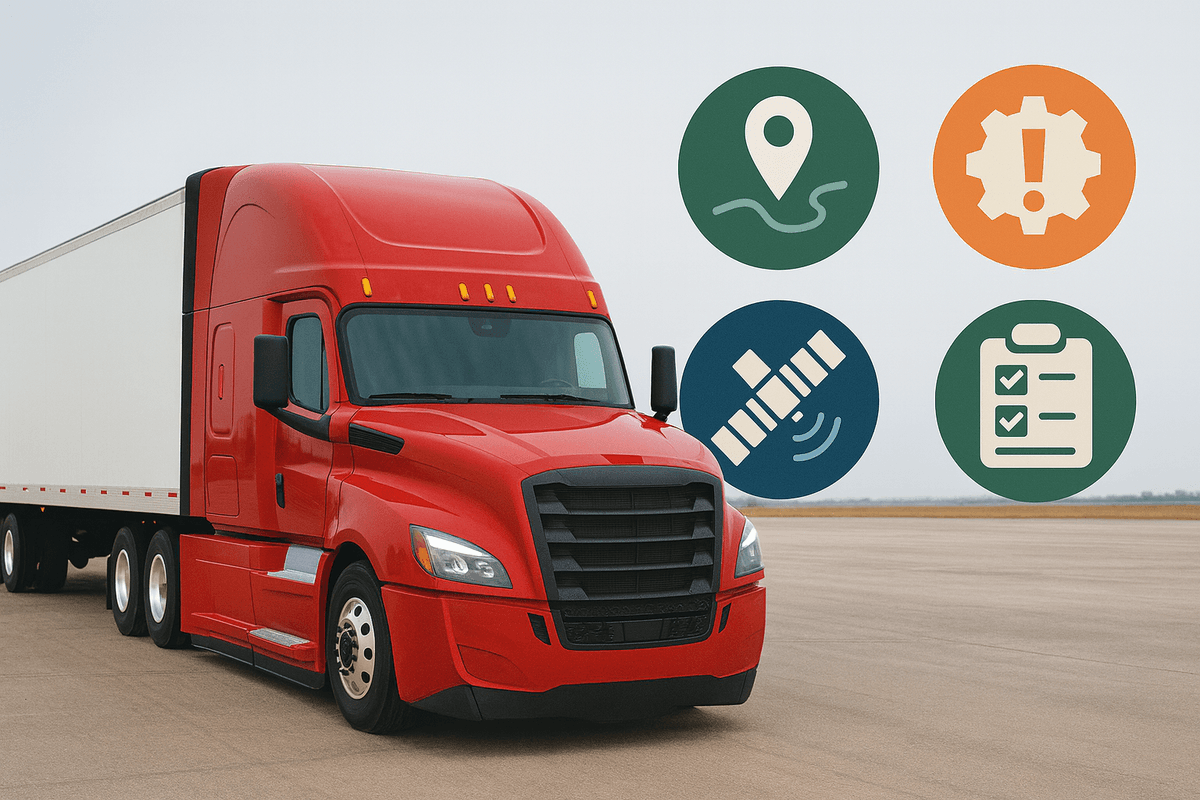
Fleet operations in the United States have become more complex, regulated, and data-driven in 2025. With rising equipment costs, fluctuating diesel prices, and tighter delivery expectations, carriers are relying more heavily on modern fleet tracking software to keep trucks productive, compliant, and safe. These platforms go far beyond simple location updates – they now integrate maintenance forecasting, diagnostic alerts, and data analytics that support stronger day-to-day decision-making.
The biggest industry shift this year is the merging of real-time tracking with automated maintenance intelligence. Fleets increasingly turn to systems that unify GPS tracking, predictive maintenance, asset monitoring, and advanced telematics systems inside one operational ecosystem. This gives dispatchers, fleet managers, and shop teams a shared source of truth for vehicle activity, equipment health, and performance trends.
Why Fleet Tracking Is a Priority for U.S. Carriers in 2025
Carriers across the country face higher pressure to keep trucks moving efficiently. Roadside inspections have increased, parts shortages still impact repair timelines, and customers expect narrow delivery windows. As a result, blind spots in fleet movement or maintenance status can quickly turn into costly downtime.
Modern fleet tracking software addresses these challenges by offering real-time visibility into every vehicle’s location, condition, and operational status. This includes fault-code alerts, engine diagnostics, idling insights, and route performance data – all essential for preventing unplanned breakdowns and improving driver productivity.
With more fleets adopting predictive maintenance strategies in 2025, maintenance teams can identify developing issues earlier and schedule repairs before they cause delays, CSA violations, or expensive roadside failures.
How Tracking Software Improves Maintenance & Reliability
2025 fleet platforms collect more data than ever before. Through integrated telematics systems, trucks continuously report on engine temperature, tire pressure, battery voltage, fuel burn, and driving behavior. These insights allow fleets to forecast maintenance needs with greater accuracy, reducing surprise repairs and improving shop scheduling.
At the same time, dispatch departments benefit from advanced GPS tracking that supports truck-legal routing, detour avoidance, traffic-aware ETAs, and safety monitoring. Instead of relying on outdated GPS apps or manual updates, dispatchers can track every movement in real time and respond faster to disruptions.
Together, these capabilities create a more connected operation where routing decisions, maintenance planning, and driver communication all work from the same intelligence layer.
Core Features Fleets Rely On in 2025
The most valuable capabilities inside modern fleet tracking software include:
- Real-time GPS tracking with commercial-vehicle routing and location precision
- Comprehensive asset monitoring for tractors, trailers, and powered/unpowered equipment
- Engine diagnostics and predictive maintenance alerts based on telematics data
- Fault-code notifications through advanced telematics systems
- Driver performance analytics covering idling, speeding, braking, and fuel usage
- Automated maintenance logs aligned with mileage, engine hours, and sensor inputs
Operational Advantages for Fleets of All Sizes
Small, mid-sized, and large fleets all benefit from adopting modern tracking platforms in 2025. Smaller carriers gain access to real-time visibility tools that historically only enterprise fleets could afford. Larger carriers use fleet tracking software to coordinate multi-terminal networks, monitor lane efficiency, and reduce downtime through better planning.
Safety and compliance also see improvements. With transparent data from telematics systems, fleets can quickly identify risky driving habits, support coaching efforts, and reduce the likelihood of violations. Meanwhile, maintenance insights help keep equipment inspection-ready, lowering the risk of out-of-service orders.
Uptime, Cost Control, and Safety: The 2025 Priorities
With operating costs rising across the U.S., fleets are prioritizing the tools that deliver the highest impact on downtime reduction and asset longevity. Platforms that integrate asset monitoring, maintenance forecasting, and GPS tracking give carriers a competitive advantage by improving reliability and protecting vehicle lifespan.
As adoption of advanced telematics systems continues to accelerate in 2025, fleets benefit from clearer visibility into operations and stronger long-term equipment performance. Identifying issues early reduces roadside breakdowns, emergency repairs, and unplanned tows – events that quickly erode margins.
Final Thoughts
In 2025, successful fleet operations depend on more than strong dispatching – they require technology that strengthens visibility, maintenance readiness, and driver performance. With modern fleet tracking software, carriers gain real-time insight into equipment health, driver activity, and operational efficiency. Paired with predictive maintenance, intelligent asset monitoring, and robust telematics systems, these tools help fleets navigate market pressures while protecting both uptime and profitability.